If you grew up summoning monsters and flipping trap cards, Sealbound: Cthulhu Rising will feel familiar in about thirty seconds — and then surprise you. It's the TCG loop you know, rebuilt from the ground up as a solo PvE campaign.
What a duelist will recognize immediately
- A real collection. Cards come from boosters, live in your collection permanently, and get built into constructed decks. No roguelike reset — your deck is yours, the way a TCG deck is.
- Summoning has a cost curve. Low-level monsters hit the board freely; big threats need setup before they land — the same tension as tribute summoning. Some heroes bend the rules, like the dragon master whose authority lets legendary wyrms arrive a turn early. Every duelist knows exactly how good cheating a summon feels.
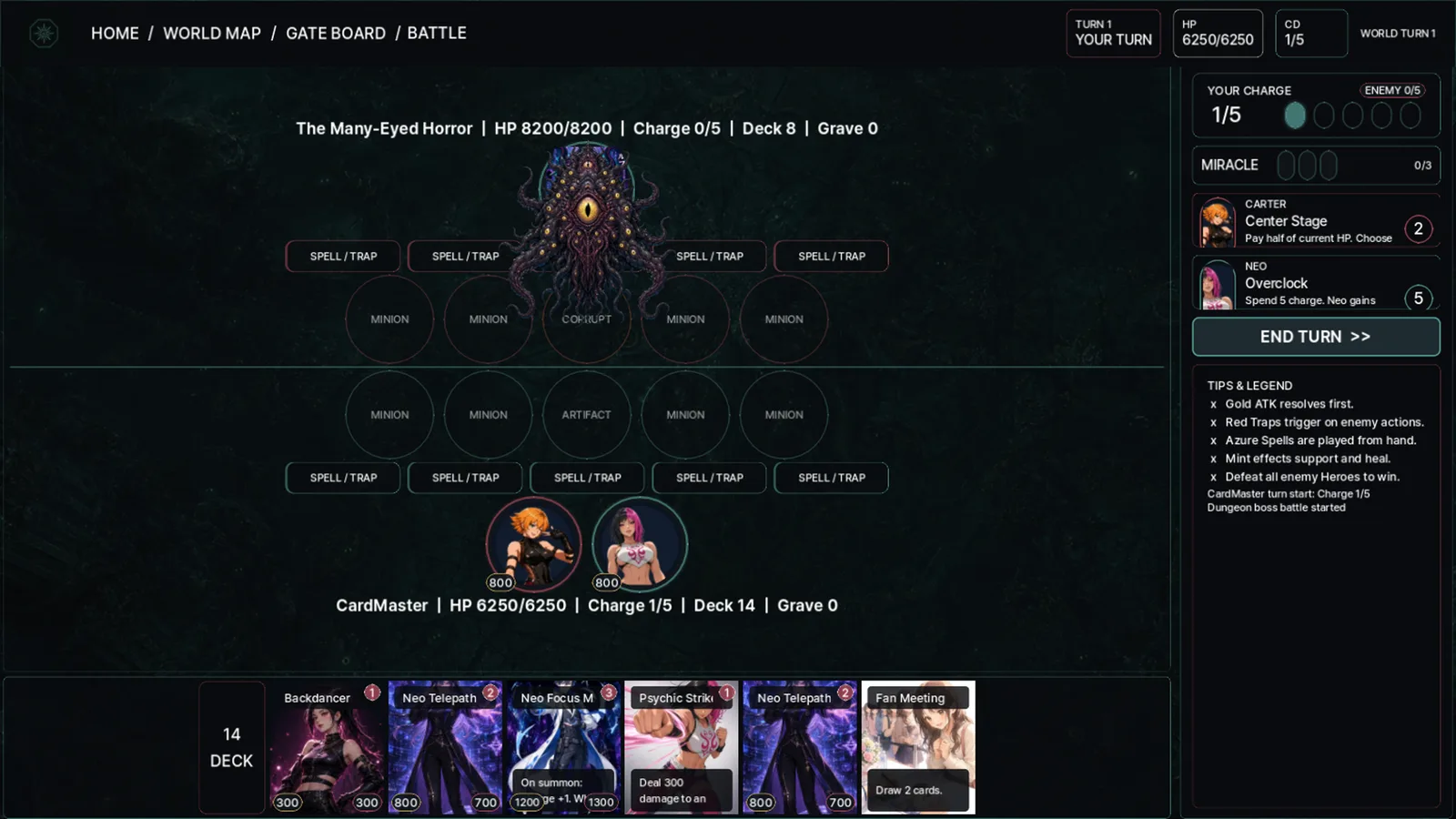
- 1v1 duels on a monster board. You and the enemy field monsters, buffs land, positions matter, and turns end in a dramatic battle resolution where the swings get big.
- The graveyard isn't the end. Spent cards cycle back — running the deck thin is a strategy, not a death sentence.
What's new if you're coming from a TCG
Your opponent is Cthulhu, not the ladder
Sealbound is single-player. Instead of climbing ranked, you're closing eldritch gates across a 1930s pulp world — and the "meta" you're solving is each Mythos boss's immunity puzzle. Nyarlathotep doesn't netdeck; he protects one rule, and you build the deck that breaks it.
Heroes lead the deck
Every deck is captained by a pair of heroes with active powers — a burst-idol dealer, a blink assassin, a psychic charge engine. Think of them as your deck's win condition made playable: the archetype identity a TCG deck gets from its boss monster, baked into the pairing itself.
Between duels, there's a board game
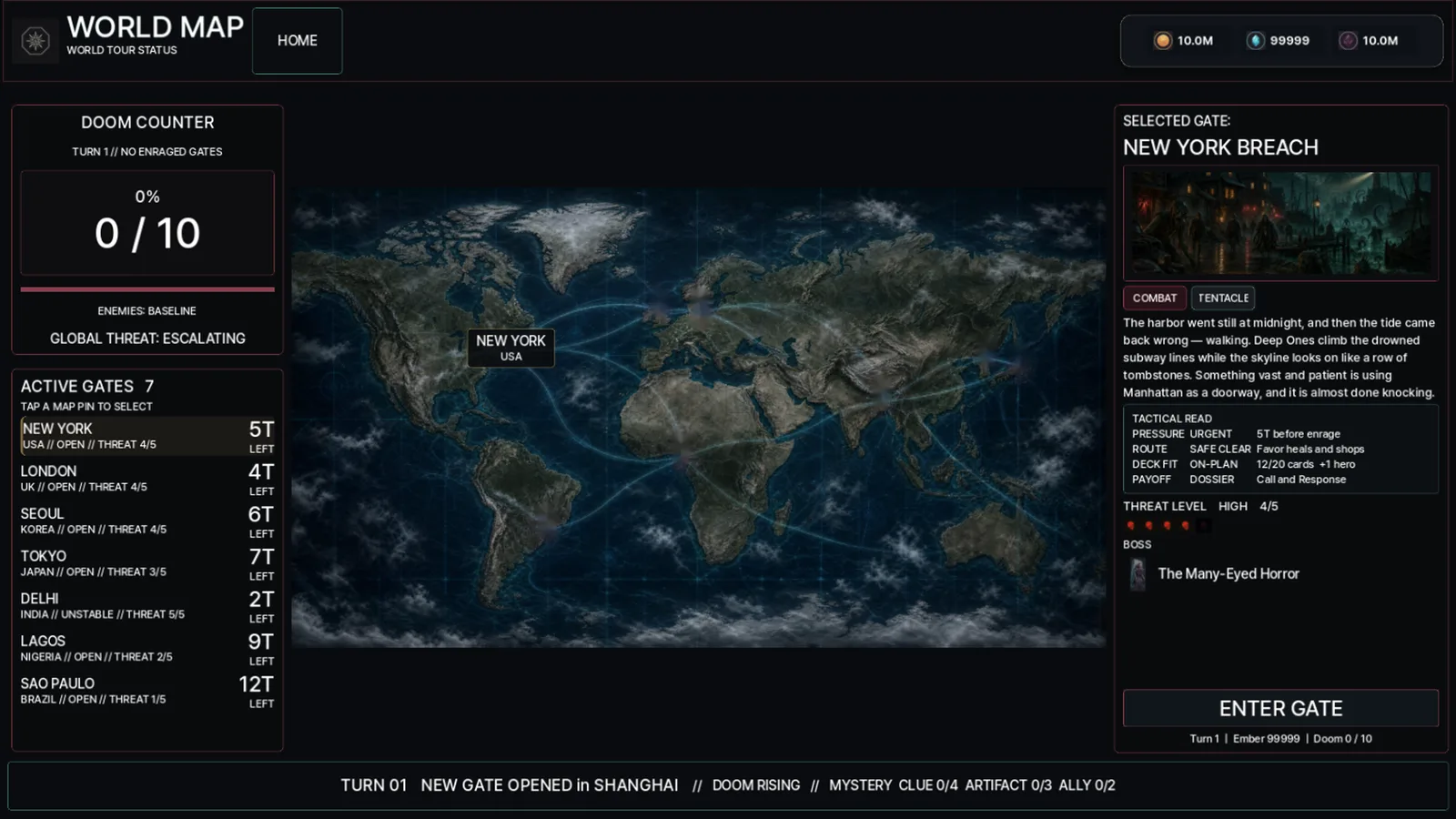
Duels happen inside gates, and gates are dice-driven boards — routes, treasure, elites, shopkeepers. The campaign layer (a world map with a rising Doom Counter) gives every duel stakes that a best-of-three never had.
The pitch, duelist to duelist
Sealbound keeps the parts of the TCG loop that made you fall in love — cracking packs, tuning a deck around an engine, the turn where your whole setup goes off — and removes the parts that require a second human and a tournament scene. It's the "heart of the cards," pointed at cosmic horror.
The free demo is live on Steam — two heroes, two gates, your first deck.